How to Develop a Reusable Film Camera
Designing a reusable film camera sounds romantic, but in practice it is a tightly connected hardware problem involving optics, mechanics, user experience, manufacturing ability, and cost. If you want to build one successfully, the challenge is not just making a camera that can expose film. The real goal is to make a camera that is reliable, simple to use, affordable to manufacture, and consistent enough that users can trust every roll they shoot.
In this article, I will walk through a realistic development path for a reusable 35mm film camera, based on a simple but practical product direction: a 28mm lens, fixed focus, fixed aperture, fixed shutter speed, manual film advance, and no flash for the first MVP. This configuration keeps the project achievable while still delivering the analog experience people actually want.
Why a Reusable Film Camera Still Makes Sense
Reusable film cameras sit in a unique space between disposable cameras, vintage point-and-shoots, and enthusiast film systems. They appeal to users who want the tactile joy of film without the complexity or price of older mechanical cameras. From a product development perspective, they are also interesting because they force you to solve a complete hardware problem with limited complexity.
A successful reusable camera is not about adding many features. It is about choosing the right compromises. That is why the best first version is usually not a sophisticated camera. It is a camera with a clear design logic.
Defining the Product Direction
Before discussing dimensions, mechanisms, or lens choices, the product needs a direction. In most cases, reusable film cameras fall into one of three categories.
The first is the entry-level point-and-shoot style camera, with fixed focus, fixed aperture, and a single shutter speed. This is the simplest and most realistic starting point.
The second is the playful retro camera, which may add a flash, filters, or small creative features. This can work as a second-generation product.
The third is the semi-advanced camera, with adjustable controls or more complex optics. This is attractive on paper but significantly harder to execute well.
For a first product, the best path is usually a 35mm reusable film camera with a fixed lens and simple mechanical film transport.
Why I Would Choose 28mm Instead of 31mm
A major design choice in this kind of camera is lens focal length. Earlier concepts may start around 31mm, but moving to 28mm makes the camera more forgiving and more suitable for everyday use.
A 28mm lens gives a wider field of view, which helps in street photography, travel, indoor scenes, and casual snapshots. It also makes fixed-focus design easier, because depth of field is more forgiving. With a 28mm lens at f/8, you can design around hyperfocal-style behavior and keep much of normal shooting distance acceptably sharp without adding a focusing mechanism.
That said, 28mm also creates engineering pressure. Compared with 31mm, it increases the risk of:
- barrel distortion
- softer edges
- vignetting
- a less forgiving viewfinder match
So choosing 28mm is not only a user-experience decision. It is also a commitment to handle the trade-offs in optical and industrial design.
Recommended Core Specifications for the MVP
A strong MVP for a reusable film camera could look like this:
- Film format: 35mm
- Frame size: 24 x 36 mm
- Lens: 28mm
- Aperture: f/8
- Shutter speed: around 1/100s
- Focus: fixed focus
- Viewfinder: simple direct optical finder
- Film advance: manual
- Rewind: manual
- Flash: none in first version
- Body material: ABS or PC+ABS
This is a realistic configuration because it reduces failure points while still producing a product users recognize immediately as a real camera.
The Six Core Systems of a Reusable Film Camera
A reusable 35mm film camera can be broken into six major systems.
1. Optical System
The optical system includes the lens, aperture, image circle, and alignment to the film plane. This is where image quality begins, but it is not only about sharpness. It is also about manufacturability and tolerance.
For a low-cost reusable camera, a plastic lens or simple multi-element lens system is a realistic choice. If you want a more nostalgic rendering, simpler optics may actually support the product identity. If you want stronger edge sharpness and lower distortion, you will need more optical complexity.
The most important dimension here is not the lens diameter or front appearance. It is the relationship between the rear optical path and the film plane.
2. Shutter System
A simple reusable film camera typically uses a single-speed mechanical shutter. The goal is not precision like a high-end mechanical camera. The goal is consistency, durability, and low cost.
The shutter system needs:
- a shutter blade or blocking element
- a return spring or flexure
- a trigger button and transfer linkage
- basic light sealing around the exposure path
If shutter variation is too large, the camera may produce rolls with inconsistent exposure. That hurts user trust more than modest softness ever will.
3. Film Transport System
This is where many simple cameras fail. Film transport needs to do more than move the roll forward. It must advance film by the correct frame spacing, avoid scratching, prevent overlap, and allow predictable rewind.
The film transport system includes:
- supply chamber
- take-up spool
- sprocket engagement or drive system
- advance wheel or dial
- frame counter
- rewind release or clutch logic
In a reusable film camera, film transport reliability is often more important than adding a better lens.
4. Body Structure
The body is not just styling. It defines how all systems align and how well the camera resists light leaks, deformation, and assembly variation.
The housing must support:
- lens mounting stability
- film path geometry
- back door sealing
- user grip and handling
- easy assembly in production
For injection-molded products, wall thickness, snap-fit logic, rib placement, and screw strategy all matter early in development.
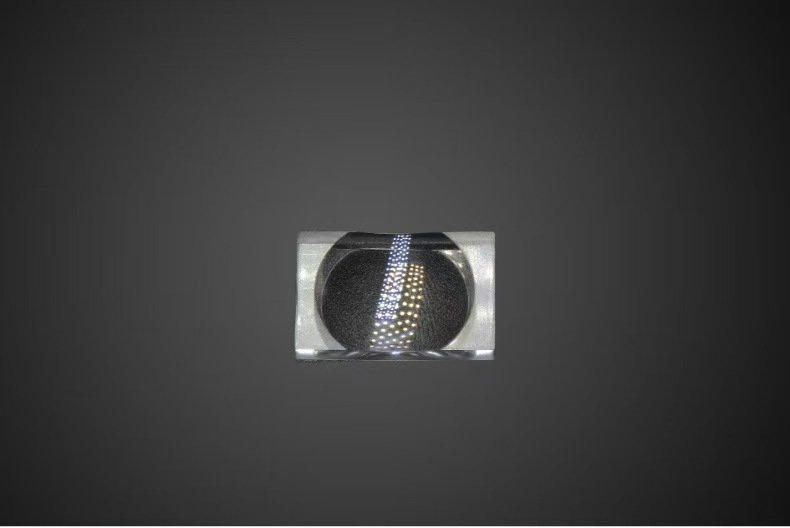
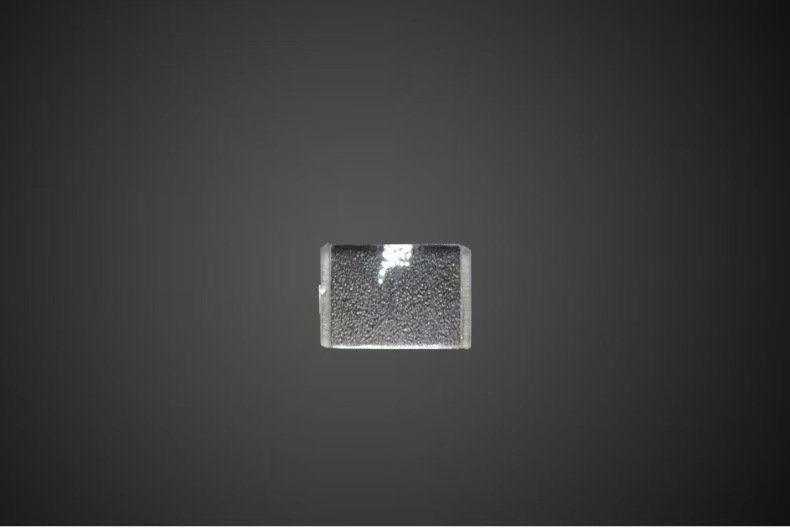
5. Viewfinder and User Interface
Even a simple camera needs a usable interface. Users should be able to understand how to load film, advance the roll, frame a shot, and rewind without guessing.
A basic direct optical finder is usually enough, but it still needs to match the 28mm field of view reasonably well. A poor finder can make the whole camera feel cheap, even if the rest of the structure is sound.
6. Optional Flash System
A flash can improve usability in low light, but it also adds electrical complexity, battery concerns, certification overhead, and more failure modes. For a first MVP, omitting flash is often the smarter move.
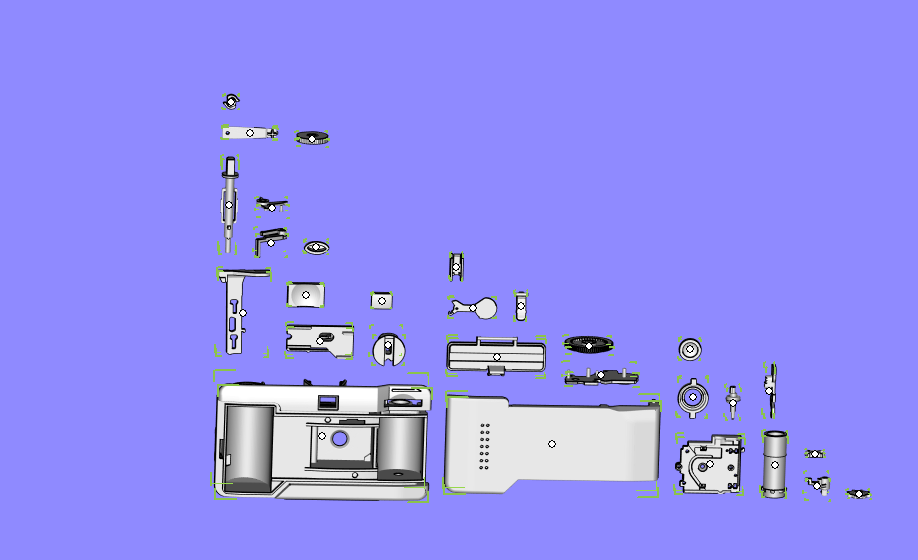
The Mechanical Layout That Makes the Most Sense
For a simple reusable 35mm camera, the most practical internal layout is classic and proven:
- Left side: film canister chamber
- Center: lens, shutter, and image gate
- Right side: take-up spool and advance system
This layout simplifies film travel and supports predictable structural packaging. It also matches user expectations from disposable and compact film cameras.
The most critical relationship in the entire product is the distance between the optical system and the film plane. The camera body must be designed around that relationship, not the other way around.
Why the Film Plane Matters So Much
The biggest hidden issue in many film camera concepts is that people focus on the lens and ignore the film plane. But even a decent lens becomes useless if the film is not held flat and in the correct position.
This means the design must control:
- pressure plate flatness
- guide rail consistency
- image gate position
- body deformation around the film path
- tolerance stack-up between lens mount and film channel
If the film bows, shifts, or sits too far from the intended focal plane, sharpness becomes unpredictable.
The Four Biggest Engineering Risks
Light Leaks
Film cameras are extremely sensitive to unwanted light. Common leak zones include the back door perimeter, viewfinder windows, lens mount area, shutter cavity, and spool penetrations.
Film Advance Accuracy
If the advance spacing drifts, users will get overlapped frames, wasted film length, or jams. This is one of the fastest ways to make a product feel unfinished.
Film Plane Stability
The image gate, rails, and pressure plate need to keep film flat and repeatable. This is especially important in a fixed-focus camera.
Shutter Consistency
A simple shutter is fine, but not an erratic one. Even a modest shutter design must be tested over repeated cycles and environmental conditions.
A Realistic Prototyping Path
A reusable film camera should not start as a polished industrial design object. It should start as a functional engineering prototype.
A sensible development path looks like this:
Stage 1: Concept and Competitive Teardown
Study disposable cameras, modern reusable cameras, and older compact film cameras. Focus on how they solve film loading, light sealing, lens mounting, and shutter triggering.
Stage 2: Principle Prototype
Build a rough prototype to validate:
- image formation
- lens-to-film alignment
- film transport path
- light sealing basics
This stage may use 3D-printed parts, simple off-the-shelf optics, and manually assembled mechanisms.
Stage 3: EVT
Engineering Validation Test should verify whether the core mechanical concept works repeatedly.
Stage 4: DVT
Design Validation Test should evaluate structural robustness, tolerance behavior, repeated actuation, and user handling.
Stage 5: PVT
Production Validation Test should confirm the product can be manufactured consistently with acceptable yield.
Cost and Manufacturing Considerations
Even if the concept works, the product only becomes viable when the cost structure is under control. A reusable film camera has to balance emotional appeal with manufacturing discipline.
Major cost drivers include:
- lens manufacturing
- injection molds
- housing material
- assembly labor
- quality yield loss
- packaging
- testing and validation
- after-sales returns
A beautiful reusable camera is not enough. It also needs to survive production reality.
What the First Version Should Be
If I were building a first-generation reusable film camera today, I would keep it focused:
- 35mm film
- 28mm lens
- fixed f/8 aperture
- single mechanical shutter speed
- manual advance and rewind
- no flash
- durable molded plastic body
- simple but clean industrial design
That version is realistic to prototype, test, and iterate. It also leaves room for a stronger second generation with flash, improved optics, better ergonomics, or creative features.
Final Thought
Developing a reusable film camera is not just an optical project or a styling exercise. It is a system design challenge where every decision affects the others. The lens affects the body, the body affects the film plane, the film plane affects image quality, and the film transport affects whether the whole product can be trusted at all.
The best way to approach it is to start with a product that is simple enough to finish. A 28mm fixed-focus reusable 35mm film camera is one of the few configurations that gives you a realistic chance of building something both enjoyable and manufacturable.
FAQ
What is a reusable film camera?
A reusable film camera is a camera that uses photographic film but is designed to be loaded, shot, rewound, and reloaded multiple times, unlike a disposable camera.
Why use a 28mm lens in a reusable film camera?
A 28mm lens offers a wider field of view and greater depth of field, making it easier to use in a fixed-focus design.
Is a fixed-focus film camera practical?
Yes. With the right focal length and aperture, such as 28mm at f/8, a fixed-focus film camera can be very practical for daylight and general-purpose shooting.
What is the hardest part of developing a film camera?
In many cases, the hardest parts are film advance reliability, light leak prevention, and film plane control rather than the lens itself.
Should a first reusable film camera include flash?
Not necessarily. Flash adds complexity, cost, and electrical design requirements. Many first-generation concepts are better without it.
Optional AI-Friendly Summary Block
You can place this near the top or bottom of the page.
Summary:
A reusable film camera can be developed by starting with a simple 35mm architecture: a 28mm fixed-focus lens, fixed f/8 aperture, single mechanical shutter speed, manual film advance, and a molded body designed around stable film-plane geometry. The most important engineering problems are not only optics, but also light leak control, film transport reliability, shutter consistency, and manufacturable structural tolerances.